
Fairfield County Arrest Records and Court Charges
Fairfield County arrest records start with the arresting agency. In Connecticut, that usually means a local police department or the Connecticut State Police, not a county sheriff. The arrest-side record may include the incident, arresting agency, date, basic charge description, booking or processing facts, bond, release conditions, and records that are subject to Freedom of Information limits or investigative restrictions. It is not the same as the court's criminal case file.
Court charges after arrest are the formal accusations tracked by the Superior Court. They can appear in the Judicial Branch criminal/motor-vehicle lookup as pending charges, docket status, daily docket entries, conviction records, and dispositions. A person who needs the full case result should use criminal court records. A person checking current custody should use inmate records. A person checking missed-court or active warrant issues should also review warrant records.
How to Find Fairfield County Arrest Records and Charges
Use a chain rather than one database. Start with the court lookup when the goal is to find formal charges, charge status, court dates, or dispositions. Start with the arresting municipal police department when the goal is the arrest report, incident report, or police record. Use the CT DOC inmate search only for current DOC custody or supervision. Connecticut does not provide a county jail booking site for Fairfield County.
- Identify the arresting agency, court location, defendant name, and approximate arrest or court date.
- Search the Judicial Branch Criminal / Motor Vehicle Case Look-up for pending cases, conviction records, or daily dockets.
- Use Fairfield-area court filters such as Bridgeport G.A. 2, Stamford G.A. 1, Danbury G.A. 3, Norwalk G.A. 20, Bridgeport J.D., Stamford J.D., or Danbury J.D.
- Read each charge, case status, next court date, disposition, and any conviction or sentencing information that is publicly displayed.
- Request arrest reports from the arresting police agency and certified court dispositions from the Clerk of the Superior Court.
For a statewide custody cross-check, use the CT DOC inmate search only if the person may be incarcerated, accused and held, sentenced, on parole, or otherwise under DOC supervision. DOC information is not a complete charge record and current incarceration does not necessarily mean conviction.
Arrest to Charges Pathway
An arrest can begin with a warrant, summons, on-view arrest, traffic stop, domestic violence response, local police investigation, or state police investigation. After processing, the person may be released on conditions, held for arraignment, or transferred into DOC custody if detention is ordered. The court-side record begins when the matter is placed on the criminal or motor-vehicle docket and formal charges are listed for court action.
Connecticut uses State's Attorneys under the Division of Criminal Justice, not county district attorneys. The State's Attorney decides how charges are prosecuted within the judicial district, and charges may be amended, added, reduced, dismissed, nolled, or resolved through plea or trial. Public defenders or private counsel may represent the accused. The State's Attorney and Public Defender offices are not the records-copy office; certified charge dispositions come from the court clerk.
| Record Point | Likely Custodian | What It Answers |
|---|---|---|
| Arrest report | Municipal police or Connecticut State Police | What agency made the arrest, incident details, and police-record availability. |
| Booking or custody status | Connecticut Department of Correction if held by DOC | Whether the person is currently in DOC custody or under DOC supervision. |
| Court charge record | Connecticut Superior Court | What formal charges, status, court date, disposition, or conviction appear in court. |
| Certified disposition | Clerk of the Superior Court | Official proof of the charge outcome and court result. |
Charge Status and What It Means
Charge records can change as a case moves. A pending charge means the court has not reached final resolution. An amended or reduced charge means the original accusation changed. A dismissal means the court terminated the charge without conviction. A nolle means the prosecutor decided not to proceed, subject to Connecticut erasure timing. A guilty plea, guilty finding, or qualifying verdict can become a conviction and lead to sentencing.
| Status | What It Means |
|---|---|
| Pending | The charge is open and still moving through court. |
| Amended / Reduced | The filed charge changed, often through prosecutorial review, plea negotiations, or court proceedings. |
| Dismissed | The charge ended without a conviction on that count. |
| Nolle | The prosecutor declined to proceed, with Connecticut erasure consequences after statutory timing. |
| Convicted | The case resulted in a guilty plea, verdict, or other qualifying criminal judgment. |
Traffic, Infraction, and Payable Violation Charges
The manifest source for charge-level traffic and payable-violation context is Conn. Gen. Stat. chapter 884, including section 51-164n on infractions and violations.
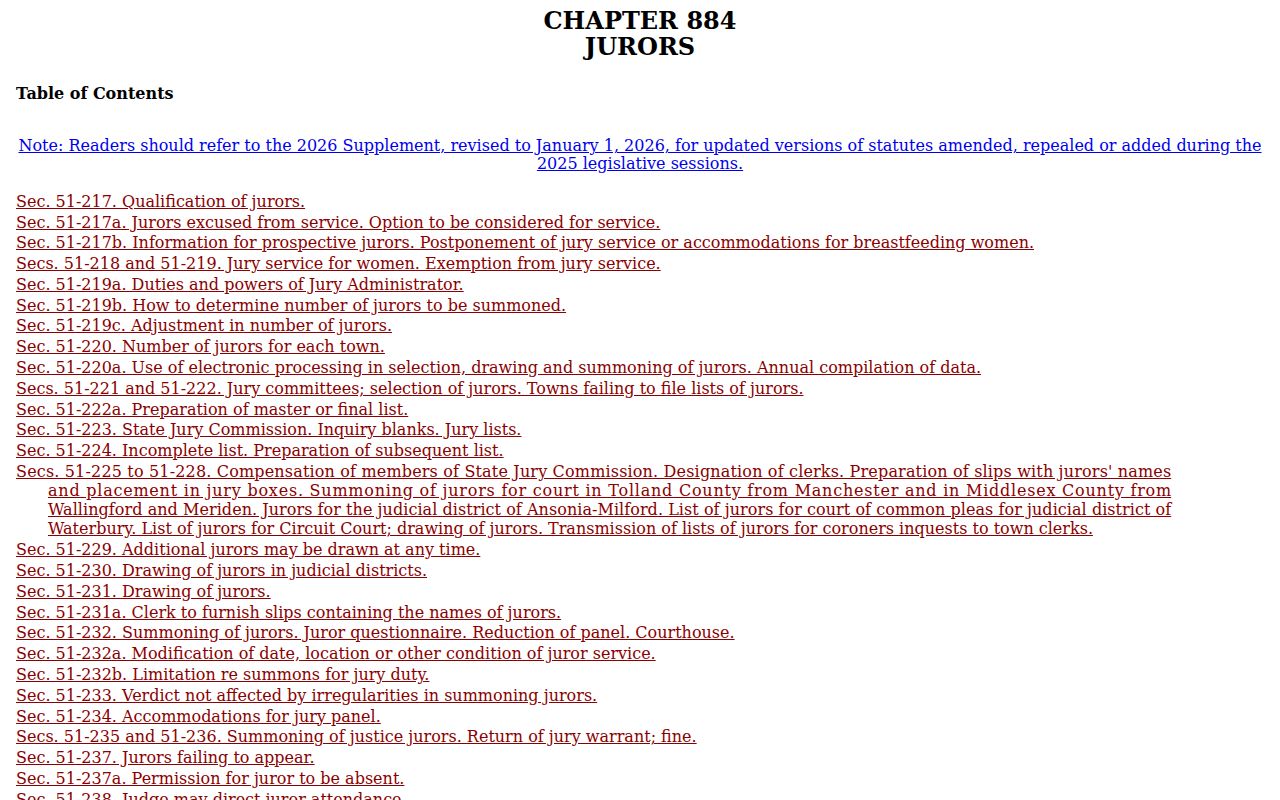
This matters because not every police encounter or ticket becomes the same kind of criminal court charge. Some infractions are payable without a criminal sentence, some violations require court action, and some motor-vehicle matters appear in the criminal/motor-vehicle lookup rather than a civil case search.
State's Attorney Filing Role
The federal counterpart for federal charges in Connecticut is the U.S. Attorney's Office for the District of Connecticut, which is listed in the manifest for arrest and charge research.
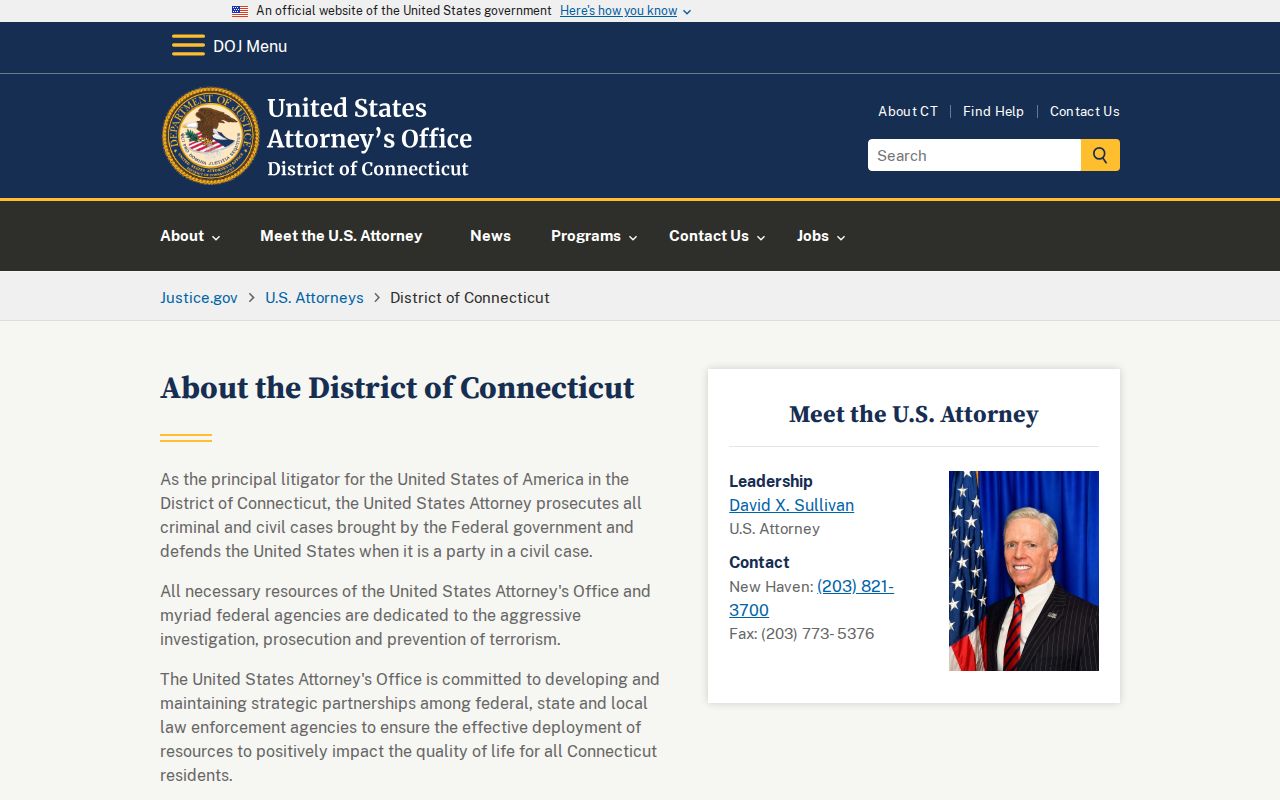
Most Fairfield County arrest-to-charge questions involve state Superior Court and State's Attorney offices, but federal charges are separate. A federal arrest, indictment, complaint, detention hearing, or plea will not be found through Connecticut Superior Court criminal lookup; federal dockets use PACER, District of Connecticut CM/ECF, federal prosecutor records, and U.S. Marshals or BOP custody channels.
Charges vs. Convictions
Being arrested or charged is not the same as being convicted. A court charge is an allegation that must still be resolved in court. A conviction requires a guilty plea, guilty verdict, or other qualifying result. Fairfield County court searches can show both pending charges and conviction records, but display rules and erasure law can remove or limit records after certain nonconviction outcomes.
| Charge | Conviction | |
|---|---|---|
| Stage | Accusation after arrest, summons, or prosecutor filing. | Final guilty result or qualifying judgment. |
| Burden | Based on charging standards and probable cause. | Requires plea, verdict, or judicial finding under criminal standards. |
| Record Meaning | May be pending, dismissed, amended, nolled, or resolved later. | Can trigger sentence, probation, fines, collateral consequences, and conviction display limits. |
Sealed vs. Erased Charge Records
Connecticut's key criminal-record restriction is erasure. Under Conn. Gen. Stat. section 54-142a, many dismissed, not-guilty, nolled after statutory timing, pardoned, or otherwise qualifying criminal records are not disclosed as ordinary public records. Sealed records are restricted by court order, Practice Book rule, or protected status. Juvenile and youthful offender cases are not shown on the public criminal lookup.
| Sealed | Erased | |
|---|---|---|
| Visibility | Hidden or limited by rule, order, or confidentiality status. | Non-disclosable under Connecticut erasure law. |
| Typical Cause | Motion to seal, protected facts, juvenile-related limits, safety, or privacy issues. | Dismissal, not guilty, nolle after waiting period, pardon, or other statutory eligibility. |
| Public Portal Result | May suppress documents or case details. | May remove the case or prevent ordinary public disclosure. |
Charge Codes, Severity, and Multiple Counts
One arrest can produce several charges. A single incident might include a criminal charge, a motor-vehicle charge, a protective-order issue, a bond condition, and later amended counts. The charge record may identify the statute, offense description, case type, charge status, and disposition. Severity matters because infractions, violations, misdemeanors, and felonies follow different court paths and can carry different consequences.
In Fairfield County, a felony may begin in a G.A. court for arraignment and then move to a judicial district proceeding. Motor-vehicle matters may stay in criminal/motor-vehicle court or be handled through ticket payment, online review, not-guilty plea, or Centralized Infractions Bureau processes. For the driver's license side, use DMV driver history rather than assuming the court case shows every licensing consequence.
Statewide Charge and Criminal History Lookups
The Judicial Branch criminal/motor-vehicle lookup is the primary public court channel for pending cases, daily dockets, convictions, warrants, and sentence review. It is not a complete fingerprint-based criminal history. Criminal history may change because of erasures, corrections, pardons, and display limits. For official background-check uses, follow the applicable state criminal history process and do not rely only on a public court search.
When a person is currently held, the CT DOC inmate search can confirm DOC custody or supervision, but it does not prove conviction and does not replace the court charge record. Federal charges use federal systems such as PACER, District of Connecticut CM/ECF, U.S. Attorney records, U.S. Marshals custody information, and the Federal Bureau of Prisons inmate locator for sentenced federal custody.
Background Check Considerations
Arrest records, charges, and convictions carry different legal meanings. A public arrest report may show that police made an arrest. A pending court charge shows an accusation in court. A conviction shows a final guilty result. A certified disposition from the Clerk of the Superior Court is the better source when the user must prove whether a charge was dismissed, nolled, reduced, or resulted in conviction.
Important: Do not use casual public lookups for FCRA-regulated employment, tenant, credit, insurance, or eligibility screening decisions.
Restricted Charge Records in Fairfield County
Several charge records may not appear in public search results. Juvenile and youthful offender matters are excluded from ordinary criminal lookup. Erased nonconvictions are not disclosed. Sealed warrants, sensitive family violence details, protected addresses, victim information, mental health-related material, and ongoing investigative records may be limited. Local police FOI requests can also be denied or redacted when a law-enforcement exemption applies.
If a charge should no longer be public, verify the docket and disposition first. For a dismissed, not-guilty, nolled, pardoned, or qualifying record, ask the court about erasure status under section 54-142a. For sealing, file the appropriate motion in the court that handled the case. For police records, contact the arresting agency's records unit and expect redactions when statutes or investigations require them.