
How to Search Fairfield County Court Records
The main access path is split by court record type. Civil, family, housing, and small claims cases are searched in the Superior Court Case Look-up. Criminal and motor-vehicle matters begin at the Judicial Branch Criminal / Motor Vehicle Case Look-up. Probate files use the separate Probate Court Case Lookup Tool, and federal filings from Bridgeport or other District of Connecticut divisions use PACER or federal CM/ECF systems.
Before searching, identify whether the case was civil, family, criminal, housing, probate, traffic, or federal. Fairfield County locations in the state lookup include Bridgeport J.D., Stamford/Norwalk J.D., Danbury J.D., Bridgeport Housing Session, Stamford Housing Session, G.A. 2 at Bridgeport, G.A. 1 at Stamford, G.A. 3 at Danbury, and Norwalk G.A. 20. A docket number is fastest, but a party name search can find many civil and family files when the docket is unknown.
- Choose the correct system: civil/family/housing/small claims, criminal/motor vehicle, probate, or federal.
- For civil lookup, search by party name if the docket is unknown, or by docket number if it is known.
- Use Fairfield-area location filters such as FBT, FST, DBD, BPH, or NWH when the search returns too many results.
- Open the matching case detail and review party names, case type, events, motions, judgment, or disposition fields.
- Contact the Clerk of the Superior Court at the filing location for certified copies, older files, or documents not displayed online.
Fairfield County Court Records Search Fields
The civil party search and docket search use Connecticut location and case-category fields. Party search is useful for broad lookups; docket search is better when a citation, pleading, judgment, or old notice already provides the docket. Criminal pending searches use a different form that accepts defendant name fields, birth-year filters, court location, and case type.
| Field Label | Type | Required | Notes / Format |
|---|---|---|---|
| Party Last Name | Text | Yes for civil party search | Use the party's last name; first name is optional and narrows results. |
| Location | Dropdown | No for party search | Fairfield-area examples include FBT Bridgeport J.D., FST Stamford J.D., DBD Danbury J.D., BPH Bridgeport Housing, and NWH Stamford Housing. |
| Case Category | Dropdown | No | Common public categories include CV for civil and FA for family. |
| Full Docket Number | Text | Alternative | Connecticut civil dockets combine location, category, two-digit year, and a seven-digit number. |
| Last Name Begins With | Text | Yes for criminal pending search | The criminal/motor-vehicle pending search can also use first initial, birth year, court location, and case type. |
Types of Fairfield County Court Records
Fairfield County records are organized by Connecticut's statewide court structure. The Superior Court handles civil, family, criminal, juvenile, housing, small claims, and motor-vehicle court work. Connecticut Probate Courts handle estates, trusts, conservatorships, guardianships, name changes, mental health commitments, and related local probate matters. Town clerks hold many vital and land records, while municipal police departments keep arrest reports and incident records.
The public portal path should match the custodian. A divorce case is a Superior Court family matter, not a town clerk marriage record. A probate estate is searched through Probate Court, not the Superior Court civil page unless the issue is a probate appeal. A local arrest report comes from the arresting police department, while the filed criminal case and charges appear in the criminal/motor-vehicle court lookup.
- Civil records include complaints, appearances, motions, orders, judgments, collections, torts, contracts, administrative appeals, foreclosures, and property disputes.
- Family records include dissolution, legal separation, annulment, custody, support, parentage, UIFSA, and relief-from-abuse matters.
- Criminal records include pending cases, charges, court dates, pleas, dispositions, convictions, sentences, probation, bond, warrants, and motions to seal or close.
- Housing and small claims records include summary process, rent claims, security deposit matters, small claims collections, and related judgments.
- Probate Court records include decedent estates, trusts, guardianships, conservatorships, children's matters, name changes, and mental health matters.
Civil, Family, Housing, and Small Claims Lookup
The Connecticut General Assembly publishes public-record statutes at Chapter 14 of the Connecticut General Statutes, including inspection and copy rules that affect public-record access.
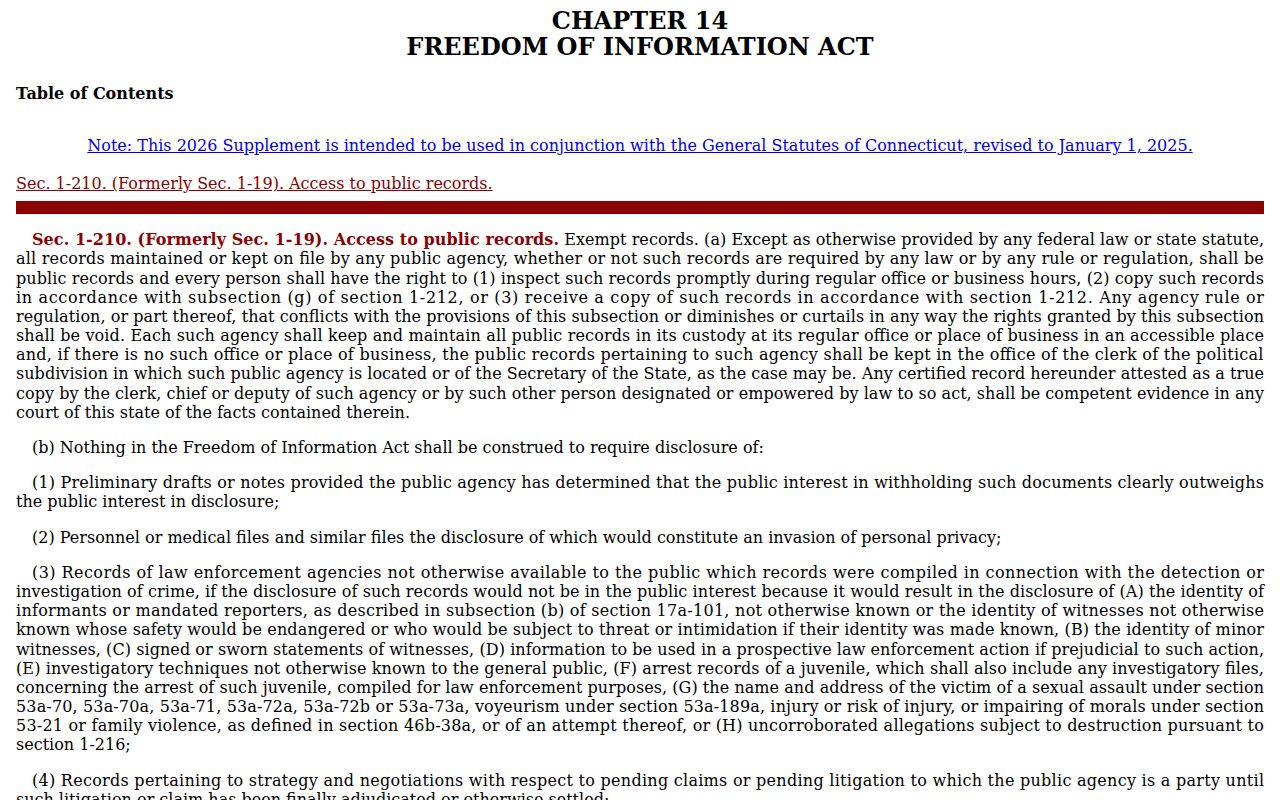
Those statewide public-record rules work alongside court-specific access rules, portal display limits, and sealing or erasure laws. A record can be a public agency record in general terms but still be unavailable online because it is sealed, erased, juvenile, protected, too old for the display system, or held by another custodian.
What Fairfield County Court Records Show
Public case details can show the procedural history of a case without necessarily providing every document image. Civil detail often includes the location and docket number, case name, category, filing date, return date, party names, attorneys or Juris numbers, appearances, scheduled events, motions, pleadings, documents, judgment entries, and links to court events. Criminal detail can show defendant name, docket or case number, court location, case type, charge category, status, next court date, disposition, and conviction information when displayable.
| Field | What It Shows |
|---|---|
| Docket Number | The court's unique case identifier, often including a Fairfield-area location code and case category. |
| Filing Date | When the case entered the court system or when a specific pleading was filed. |
| Parties | Plaintiffs, defendants, petitioners, respondents, applicants, fiduciaries, or other participants depending on case type. |
| Events | Hearings, motions, short calendar activity, orders, continuances, judgments, dispositions, and notices. |
| Disposition | The result of a charge, motion, claim, or case, including dismissal, judgment, conviction, or other final action. |
Public Access Framework for Fairfield County Court Records
Conn. Gen. Stat. section 1-210 provides that public agency records are generally open unless federal law or state statute says otherwise. Conn. Gen. Stat. section 1-212 covers written requests for plain, facsimile, electronic, or certified copies, subject to copy rules and fees. Court records also operate under Judicial Branch rules, Practice Book provisions, clerk procedures, and specific confidentiality statutes.
Online access is not the same as complete access. The Judicial Branch civil lookup warns that case display is a public service and does not guarantee absence of errors or omissions. Certified copies, sealed-file review, older archived material, and documents that are not downloadable in the public portal route to the Clerk of the Superior Court at the courthouse where the case is pending or was disposed.
Note: If a Fairfield County record is missing from an online search, check the court location, case family, display limits, and confidentiality status before assuming no case exists.
Records That Are Sealed or Confidential in Fairfield County
Connecticut restricts several categories that often appear in court-record searches. Juvenile delinquency and child-protection records are not ordinary adult files. Youthful offender cases are not shown on the criminal lookup. Conn. Gen. Stat. section 54-142a makes qualifying dismissed, not-guilty, nolled, pardoned, and otherwise erased criminal records non-disclosable. Adoption, mental health commitment, protected-address, minor, financial-account, and sensitive family records may also be sealed or redacted.
To seek access to a restricted record, start with the court that handled the matter and provide the docket number, party names, disposition date, and the reason access is being requested. Sealing and closure issues are handled through motions or court orders, and access can be document-specific. A website cannot restore a record that has been erased, and a clerk cannot disclose a file that a statute or court order keeps confidential.
Copy and Certification Requests
For certified copies, judgment files, and older records, contact the Clerk of the Superior Court where the case is filed. A useful written request includes the docket number, party names, case type, approximate filing or disposition date, requested document, whether certification is needed, mailing address, contact information, and payment arrangements. Public defender, State's Attorney, DOC, and police contacts should not be used for ordinary clerk copy requests.
Stamford/Norwalk Judicial District
123 Hoyt Street
Stamford, CT 06905
Court Service Center: 203-965-5328
Case Law and Federal Record Alternatives
For published opinions and research material outside the state trial-court lookup, the manifest source includes CourtListener, a public legal research resource that can help locate case law and docket-related references.
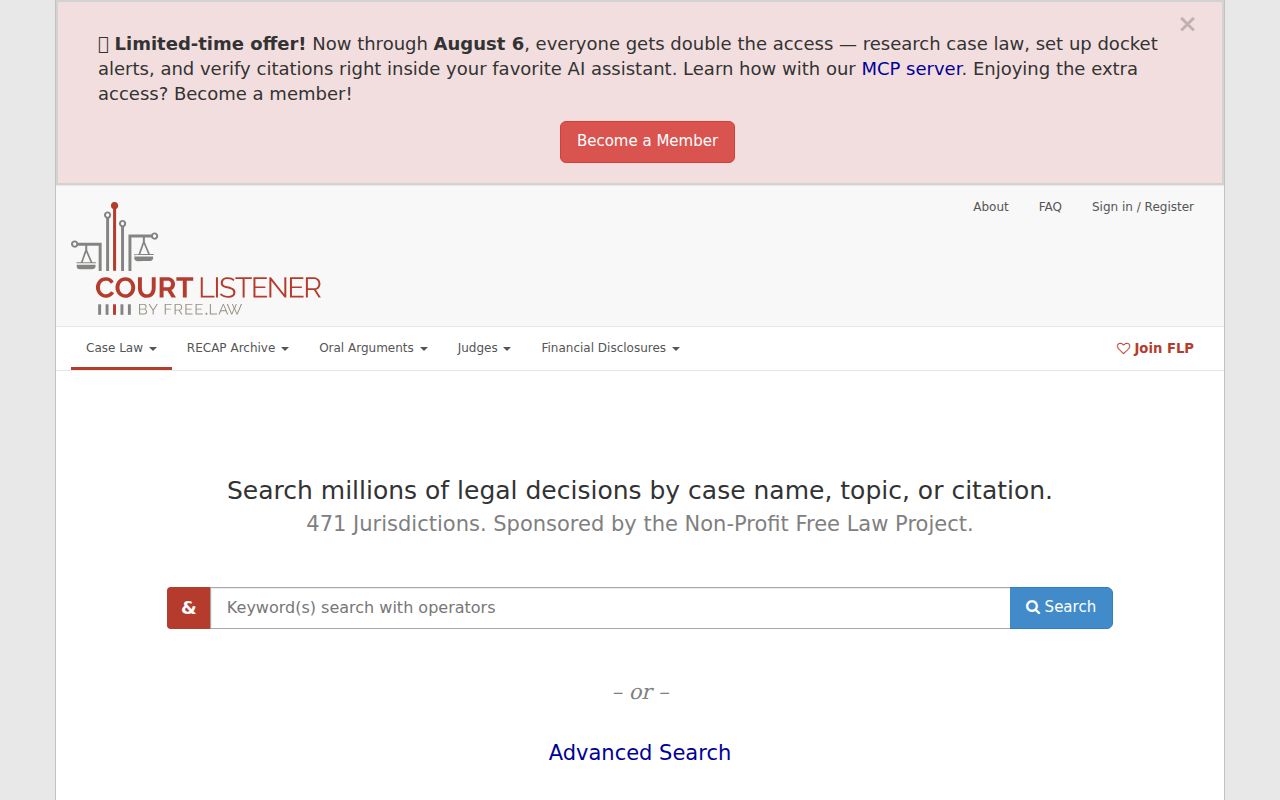
CourtListener is not the Clerk of the Superior Court and does not replace official copy requests. Use it as a research supplement, especially for appellate or federal materials, while relying on Connecticut Judicial Branch, Probate Court, PACER, or the relevant clerk for official docket records and certified documents.