
Fairfield County Superior Court
The Connecticut Superior Court is the statewide trial court of general jurisdiction. In Fairfield County, court access is spread across judicial district courthouses, Geographical Area criminal and motor-vehicle courts, housing sessions, and juvenile locations. Bridgeport, Stamford/Norwalk, and Danbury are the main Fairfield-area Superior Court centers. Norwalk G.A. 20 also appears in criminal and motor-vehicle lookup paths for lower Fairfield County matters.
Connecticut's old county identity can mislead record searches. Fairfield County does not operate a separate county trial court, county clerk, or sheriff court system. The Judicial Branch administers the Superior Court, Probate Courts handle original probate matters, local town clerks handle many land and vital records, and state or municipal agencies may hold traffic, inmate, or police-source records.
The Connecticut Judicial Branch court directions page is the statewide starting point for courthouse locations and access information.
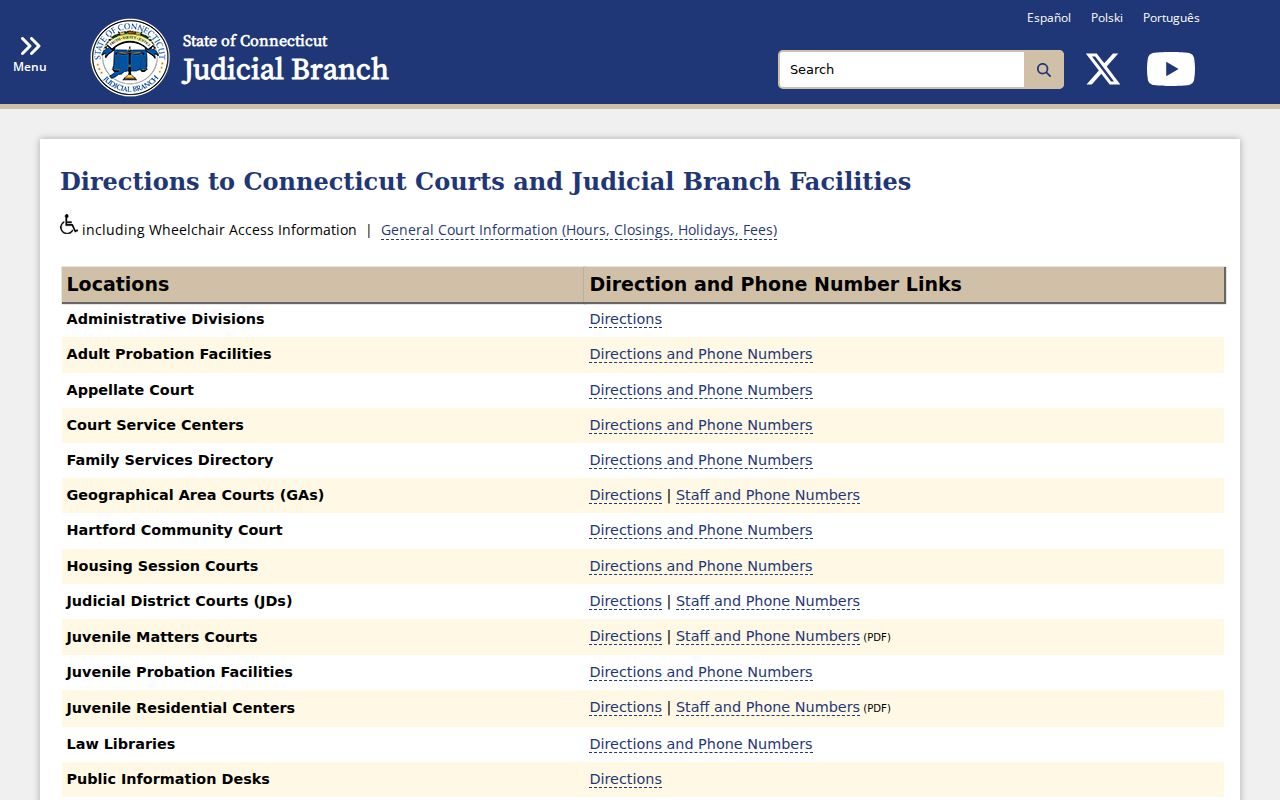
Use the location directory with the case type, because the correct courthouse can change between civil, family, housing, criminal, and motor-vehicle matters.
Fairfield Superior Court Locations
Fairfield County Superior Court work is not handled by numbered county courts. The research identifies judicial district locations and G.A. courts instead. Judicial district courthouses handle major civil, family, housing, criminal administration, and related work. G.A. courts handle many arraignments, misdemeanors, and motor-vehicle matters before some felony cases move into judicial district proceedings.
| Court / Location | Type | Address | Research Note |
|---|---|---|---|
| Bridgeport Judicial District | Superior Court J.D. | 1061 Main Street, Bridgeport, CT 06604 | Civil, family, criminal administration, and major J.D. work. |
| G.A. 2 at Bridgeport | Criminal / motor vehicle G.A. | 172 Golden Hill Street, Bridgeport, CT 06604 | No public courthouse parking; very limited metered street parking. |
| Stamford/Norwalk Judicial District | Superior Court J.D. | 123 Hoyt Street, Stamford, CT 06905 | Includes Court Service Center number 203-965-5328. |
| G.A. 1 at Stamford | Criminal / motor vehicle G.A. | 123 Hoyt Street, Stamford, CT 06905 | Same address as Stamford/Norwalk J.D., but separate case routing. |
| Danbury Judicial District / G.A. 3 | Superior Court J.D. and G.A. | 146 White Street, Danbury, CT 06810 | Public garage parking on Patriot Drive and adjacent accessible spaces. |
| Norwalk G.A. 20 | Criminal / motor vehicle G.A. | Use Judicial Branch directory listing | Appears in criminal and motor-vehicle court-location searches. |
| Bridgeport and Stamford Housing Sessions | Housing session | Use Judicial Branch housing/session directory | Landlord-tenant and housing matters route through housing sessions. |
Fairfield Superior Court G.A. Records
Geographical Area courts are central to Fairfield County criminal and motor-vehicle records. Misdemeanors, many first appearances, motor-vehicle matters, and arraignments often begin in a G.A. court. Felony matters may start there and move to judicial district proceedings. The criminal and motor-vehicle lookup pages use court-location filters that include Bridgeport G.A. 2, Stamford G.A. 1, Danbury G.A. 3, Norwalk G.A. 20, Bridgeport J.D., Stamford J.D., Danbury J.D., and related housing locations.
The Bridgeport G.A. 2 directions page gives the Golden Hill Street location, parking limits, bus access, and wheelchair access information.
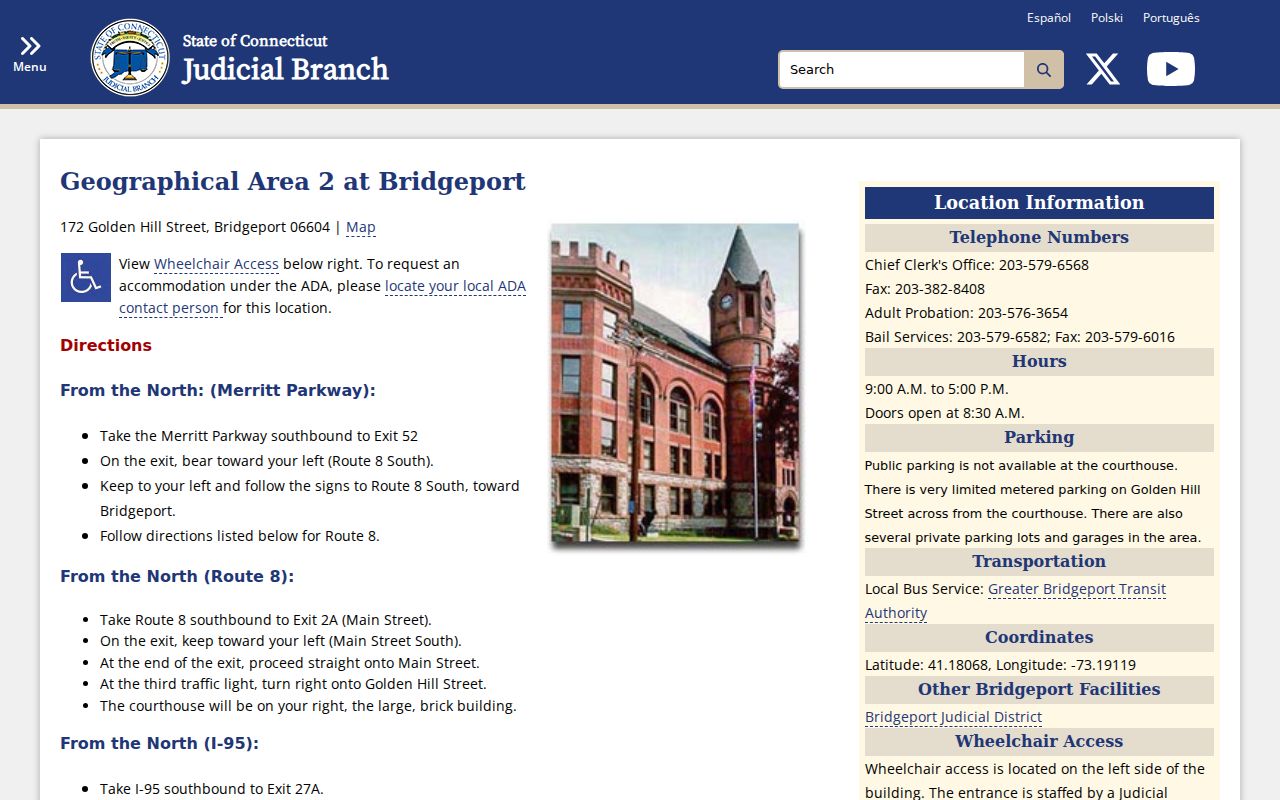
Bridgeport users should verify whether the matter is at the Judicial District courthouse or G.A. 2 before traveling downtown.
The Stamford G.A. 1 directions page documents the Stamford courthouse location used for criminal and motor-vehicle matters.
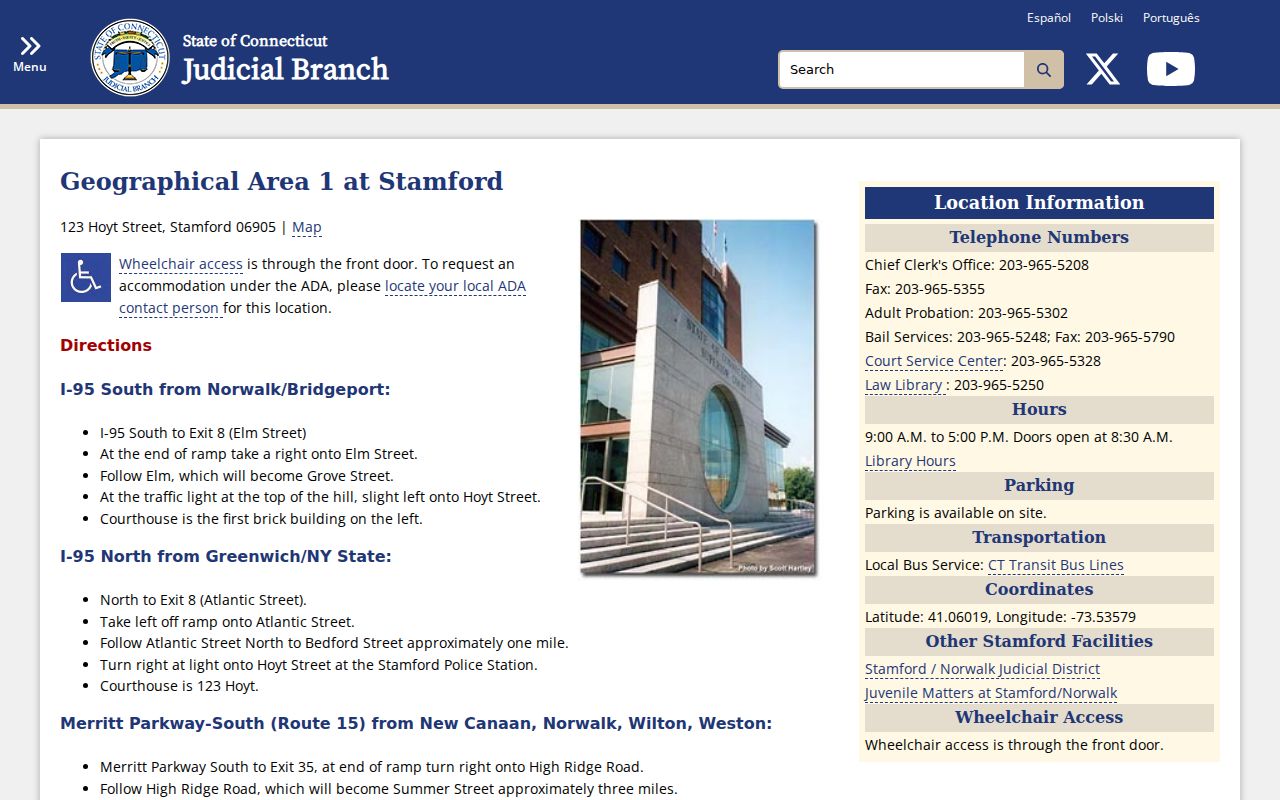
Stamford's shared address makes it important to separate the courthouse from the lookup system used for the case.
The Danbury G.A. 3 directions page describes I-84 routing, White Street location details, public parking, and accessible parking.
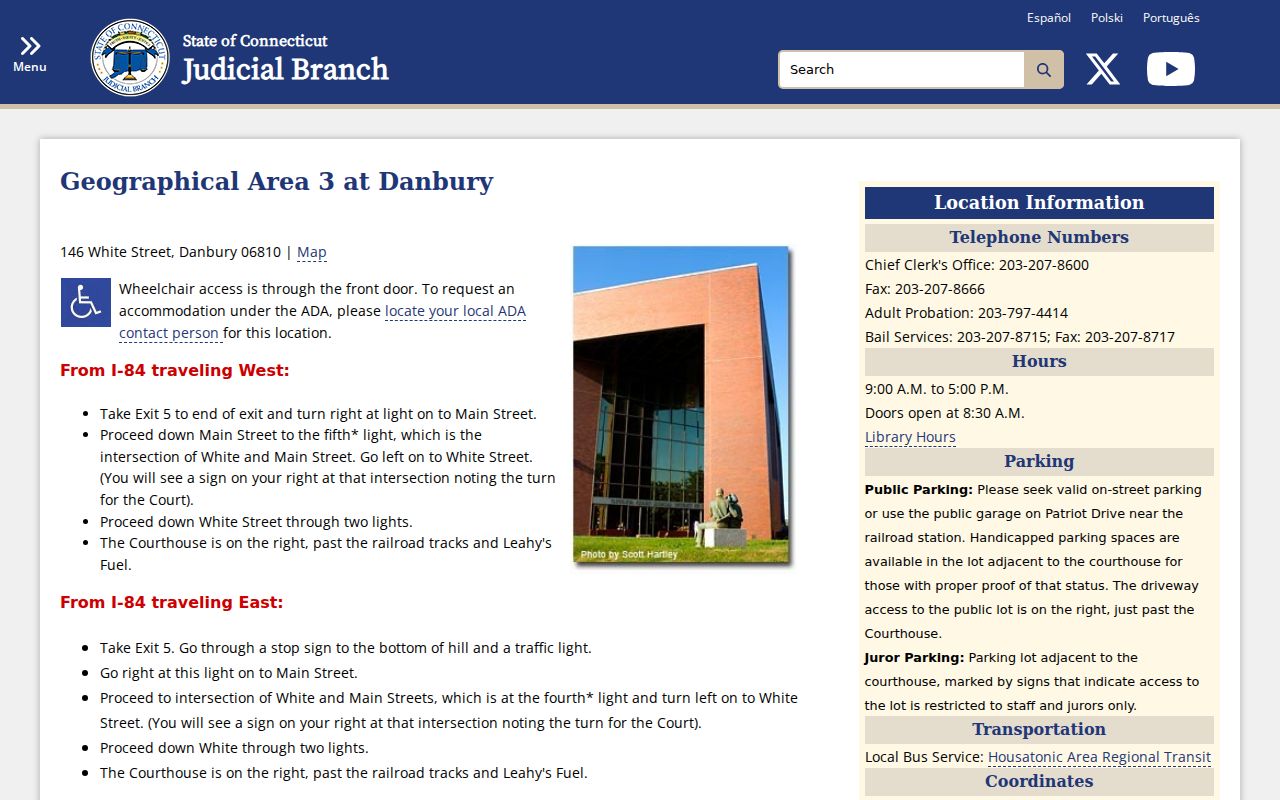
Danbury serves northern and western Fairfield-area users for both judicial district and G.A. court needs.
Superior Court vs Probate Court
Fairfield County users often search for a county courthouse first, but Connecticut splits records by court function. Superior Court is the trial court for civil, criminal, family, juvenile, housing, small claims, and motor-vehicle work. Probate Courts are separate local-district courts. Municipal and town agencies create or hold some source records before a court case exists.
| Feature | Superior Court | Probate Court | Municipal / Town Agency |
|---|---|---|---|
| Core role | State trial court for civil, criminal, family, juvenile, housing, small claims, and motor vehicle. | Estates, trusts, conservatorships, guardianships, children's matters, name changes, and commitments. | Police reports, traffic citations, land records, marriage records, and local filings. |
| Fairfield path | Bridgeport, Stamford/Norwalk, Danbury, G.A. courts, housing sessions. | Bridgeport, Fairfield, Stratford, Trumbull, Northern Fairfield County, Housatonic districts. | Town or city agency where the event or filing occurred. |
| Online search | Civil inquiry and criminal/motor-vehicle lookup. | Probate case lookup for recent estate and trust data. | Varies by municipality or agency. |
| Copy request | Clerk of the Superior Court at the filed location. | Local Probate Court chief clerk. | Town clerk, police records unit, DMV, or other custodian. |
Fairfield Superior Court Case Flow
Civil and family cases start by filing in the proper judicial district, then proceed through appearances, motions, short calendar events, hearings, judgment, and any appeal. Criminal matters may begin after arrest, bond, or summons, move through a G.A. arraignment, then continue through pretrial proceedings, plea or trial, disposition, sentencing, and appeal if applicable. Housing and small claims matters have their own tracks in the civil inquiry system.
Civil and family flow: Filing › appearance › motions or short calendar › court events › judgment › appeal.
Criminal and motor-vehicle flow: Arrest or summons › G.A. court › pretrial › plea or trial › disposition › sentence or final order.
Note: Probate appeals may appear in Superior Court, but original probate filings remain with the local Probate Court.
Search Fairfield Superior Court Records
Superior Court record searches begin by choosing the correct case family. Civil, family, housing, and small claims use the civil inquiry system. Criminal and motor-vehicle cases use the criminal lookup hub, including pending cases by defendant, pending cases by docket number, daily dockets by court or defendant, convictions by defendant or docket number, attorney/firm lookup, sentence review, motions to seal or close, and arrest warrants.
The Judicial District court directory links to Bridgeport, Danbury, and Stamford/Norwalk court entries.
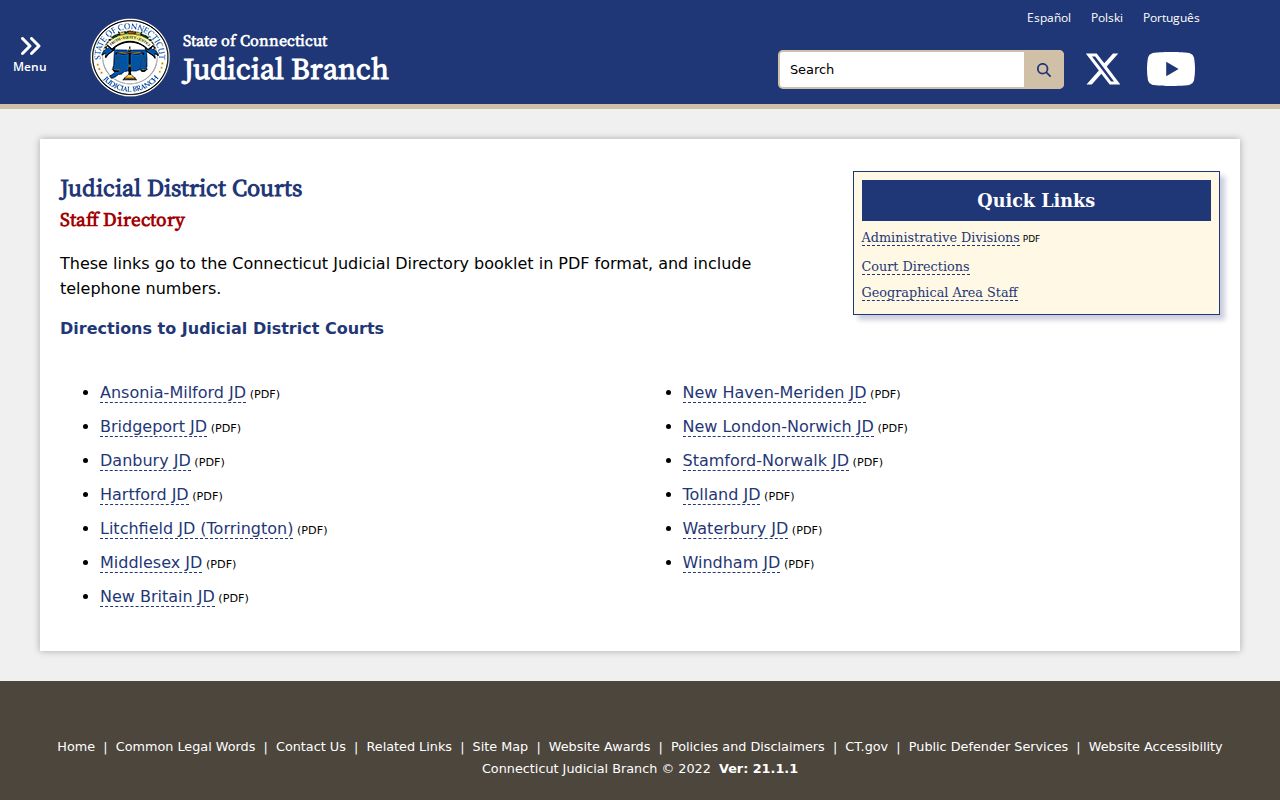
The directory supports the lookup process by confirming which courthouse should receive copy requests or in-person questions.
The Geographical Area court directory lists G.A. court entries, including Fairfield-area criminal and motor-vehicle locations.
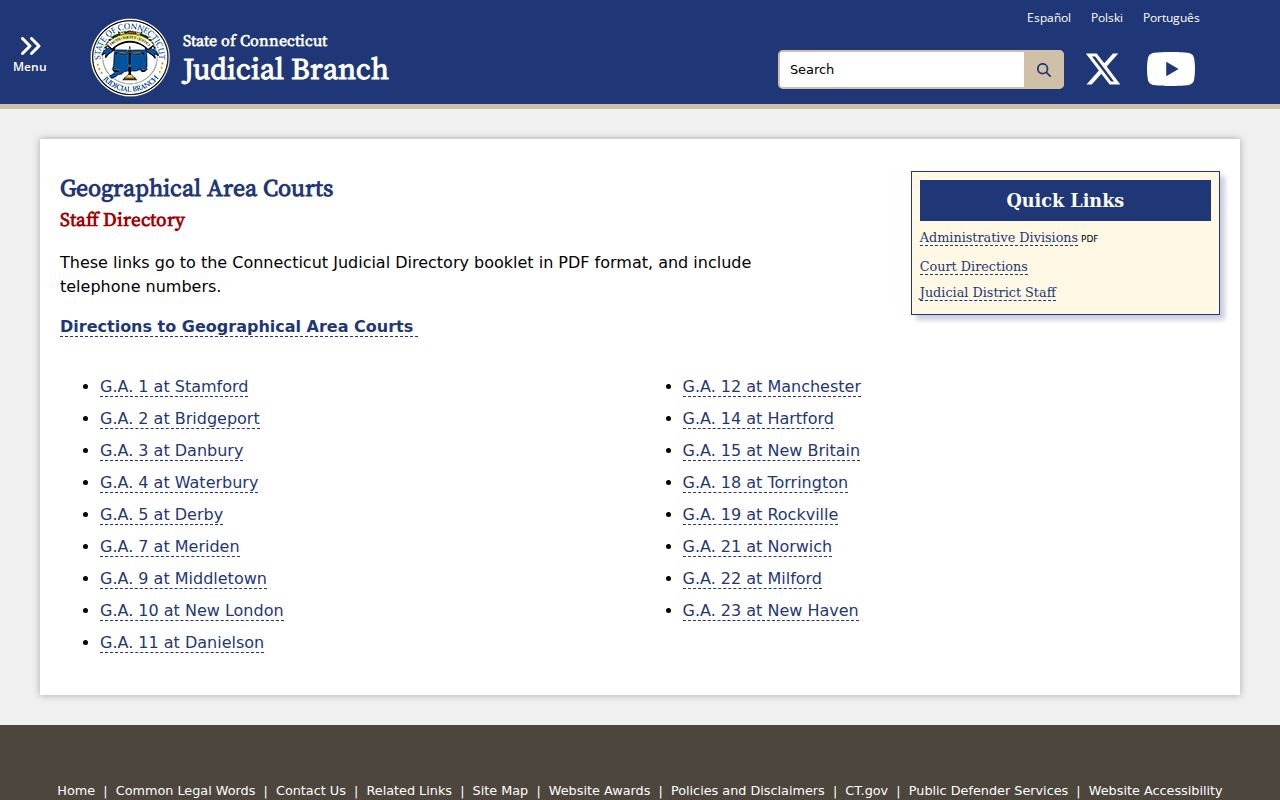
Use G.A. directory details when a pending criminal or motor-vehicle case points to a G.A. court location.
- Choose civil/family/housing/small claims or criminal/motor vehicle before searching.
- Use party search when the docket number is unknown.
- Use docket search when the full docket or location-category-year-number string is known.
- Check the court location in the result before contacting a clerk or traveling.
- Request certified copies from the Clerk of the Superior Court at the filed location.
Fairfield Court Divisions
Civil records include complaints, appearances, motions, orders, judgments, collections, contracts, torts, foreclosures, administrative appeals, injunctions, and related matters. Family records include dissolution of marriage, nonadversarial dissolution, legal separation, annulment, custody, visitation, support, relief from abuse, UIFSA, and foreign family judgments. Housing records include summary process, rent and damages, security deposit returns, housing code enforcement, entry and detainer, and injunctions.
Criminal records include pending cases, charges, docket events, pleas, court dates, dispositions, convictions, sentences, probation, bond, warrants, sentence review, and motions to seal or close. Motor-vehicle records include daily docket entries, pending cases, convictions for motor-vehicle offenses, infractions and violations, referrals for license or registration suspension, and payment or review outcomes.
| Division | Common Fairfield Search Path | Examples |
|---|---|---|
| Civil | Superior Court civil inquiry | Contracts, torts, foreclosure, administrative appeals, civil protection orders. |
| Family | Superior Court civil inquiry with family category | Divorce, custody, support, legal separation, relief from abuse. |
| Housing | Civil inquiry and housing session location | Summary process, rent, damages, housing code matters. |
| Criminal | Criminal / motor-vehicle lookup | Pending cases, convictions, warrants, dispositions, sentencing. |
| Motor vehicle | Criminal / motor-vehicle lookup and traffic channels | Traffic cases, violations, referrals for license or registration suspension. |
Fairfield Superior Court Access Limits
Public access is broad for many adult civil and criminal records, but it is not unlimited. Juvenile records, youthful offender cases, erased criminal matters, sealed motions or orders, protected family details, financial account numbers, minor identifiers, mental health material, and protected addresses may be withheld or redacted. A record absent from a public lookup may be sealed, erased, too old for online display, or held in another system.
Connecticut public-record rules also do not make every online record a certified court copy. Certified copies almost always require clerk processing and fees. If the case result affects legal rights, use the public lookup to identify the record, then verify the document with the Clerk of the Superior Court. For federal filings, use District of Connecticut federal court systems instead of the state Superior Court.