
Fairfield County Warrant Channels
Connecticut warrant information is split across several official channels. The Judicial Branch links an Arrest Warrants lookup from its criminal and motor-vehicle case page. Pending criminal and motor-vehicle cases can also be checked from the Criminal / Motor Vehicle Case Look-up hub. Those tools matter for Fairfield County because Bridgeport, Stamford, Norwalk, and Danbury matters may be assigned to different G.A. or Judicial District locations.
There is no researched Fairfield County sheriff warrant desk. A warrant may also be held or confirmed by Bridgeport G.A. 2, Stamford G.A. 1, Danbury G.A. 3, Norwalk G.A. 20, the police department that investigated the incident, counsel, or the Clerk of the Superior Court at the issuing location. Public record requests can help with police records, but sealed warrants and active investigative records may not be released.
The Judicial Branch arrest warrant interface is the official starting point for public warrant lookup.
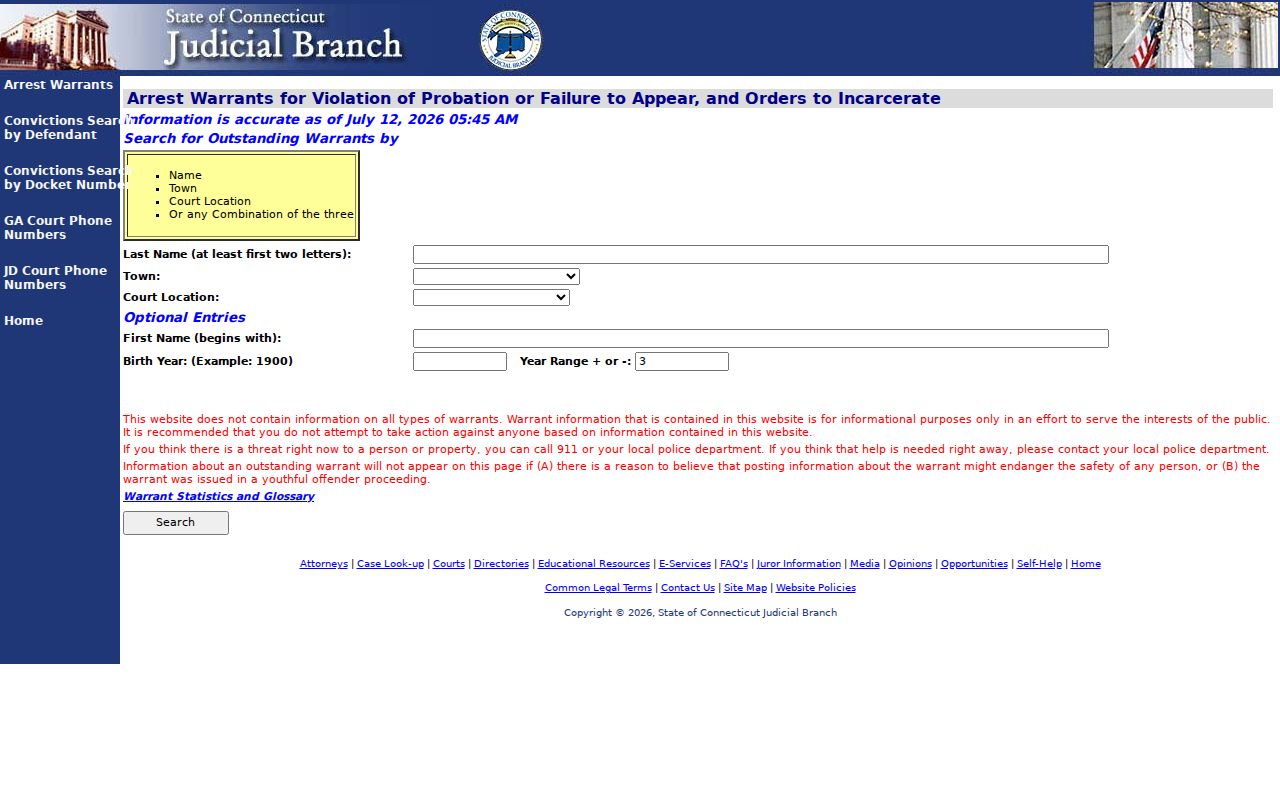
Use that result as a lead, then confirm the warrant with the issuing court or counsel before surrender, payment, or travel.
Fairfield County Warrant Types
Fairfield County warrant records can come from different parts of the criminal process. An arrest warrant may begin with a police investigation and court authorization. A bench or re-arrest order may follow a missed court date, violation of release terms, probation issue, or failure to comply with a court order. Search warrants are different because they authorize a search of a place, device, or item and may be sealed while an investigation is active.
- Arrest warrant records identify a person sought on a criminal allegation or court-approved arrest order.
- Bench warrant or re-arrest information often relates to missed hearings, nonappearance, or violated court terms.
- Probation or violation warrant entries may link to an older criminal case and supervision status.
- Search warrant records may stay nonpublic until service, return, or a later court order.
How to Search Fairfield County Warrants
Start with the state warrant lookup, then move to criminal case and docket tools if the first search is thin. Fairfield County users should pay close attention to court location because a Bridgeport, Stamford, Danbury, or Norwalk case can route through a different G.A. court. If a result suggests an active issue, the safer next step is verification with an attorney, public defender, clerk, or law enforcement.
- Open the official Judicial Branch arrest warrant lookup and search with the best name details available.
- Check pending criminal or motor-vehicle cases by defendant or docket number from the Judicial Branch criminal lookup hub.
- Review the daily docket by defendant if a missed hearing may have caused the warrant.
- Identify the issuing court location, such as Bridgeport G.A. 2, Stamford G.A. 1, Danbury G.A. 3, or Norwalk G.A. 20.
- Verify bond, appearance, and surrender instructions before appearing at court or a police department.
The criminal daily docket by defendant can help connect a warrant concern to a scheduled or missed court event.
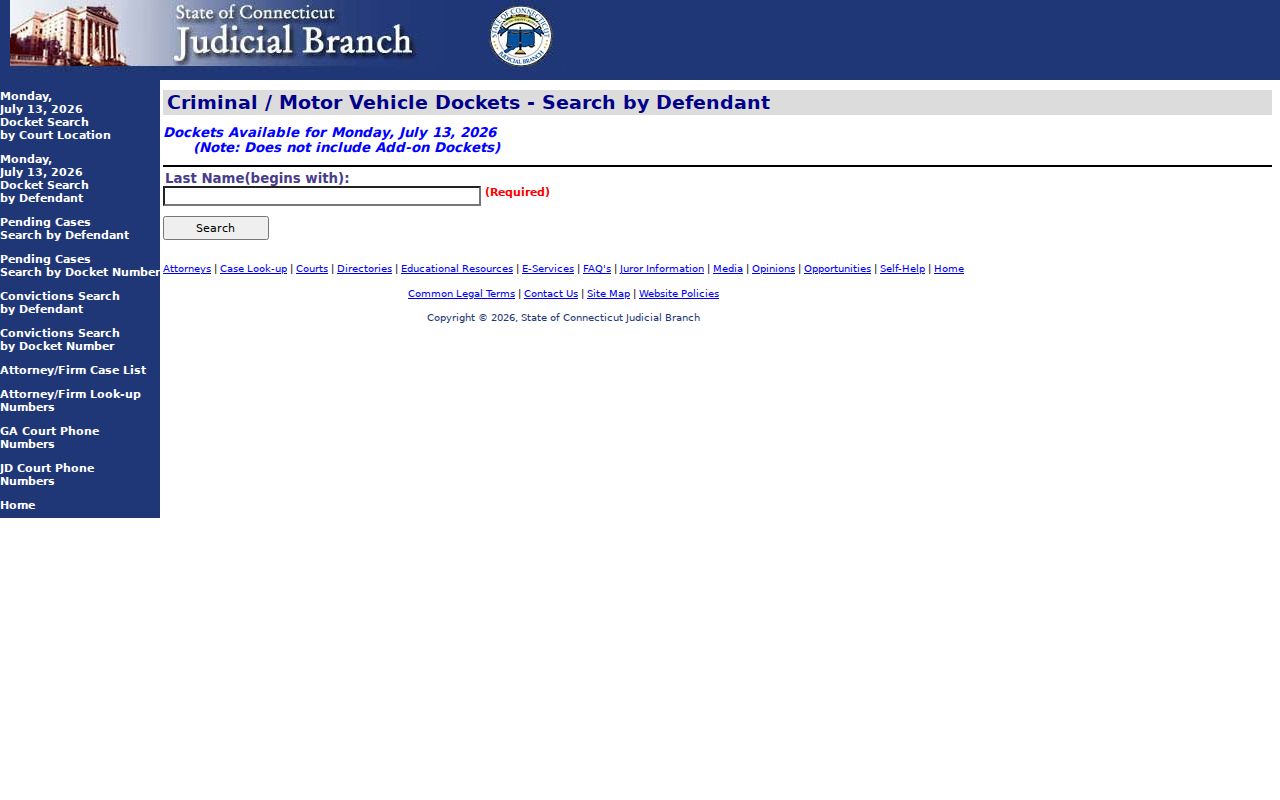
Daily docket data is useful for timing, but it is not a complete warrant clearance record.
Fairfield County Warrant Search Fields
The research captured only partial warrant-form fields, so the public page should be treated as a lookup aid rather than a full case file. Related criminal case searches have stronger field guidance and can confirm a pending docket. Use enough identifiers to avoid confusing people with the same or similar names.
| Field | Where Used | Required | Notes |
|---|---|---|---|
| Name | Arrest warrant and defendant searches | Usually yes | Use exact spelling and aliases if known. |
| Docket number | Pending criminal lookup | Alternative | Best for known court cases tied to a warrant concern. |
| Court location | Pending case and daily docket searches | Optional | Fairfield-area filters include Bridgeport, Stamford, Danbury, and Norwalk locations. |
| Birth year | Pending defendant search | Optional | Helpful when common names produce multiple results. |
What Fairfield County Warrant Records Show
A public warrant or related case result may show only part of the record. The court, police agency, or attorney may have more precise information about bond, service, surrender, or whether an order has already been vacated. Do not assume that a missing web result proves no warrant exists.
| Field | What It Shows |
|---|---|
| Defendant name | The person associated with the warrant or underlying case. |
| Court or docket number | The Superior Court case or court location tied to the issue. |
| Warrant context | Failure to appear, probation violation, criminal charge, or other public status when shown. |
| Charge or original case | The alleged offense or prior case that led to the warrant entry. |
| Bond or release term | Any public bond amount, release condition, or appearance instruction shown. |
| Status | Whether the case appears pending, resolved, or still needs direct confirmation. |
Resolve Fairfield County Warrants
A website result should not be the only basis for surrender or payment. Confirm the issuing court, ask whether bond is set, and learn whether a court appearance is required. Bring identification and proof of any completed payment, program, or compliance item. After the warrant is cleared, request written confirmation or a docket update from the court or counsel.
Important: Speak with counsel or the public defender before surrender when a warrant may involve arrest, bond, probation, or jail exposure.
The pending criminal docket-number lookup is useful when the docket is known.
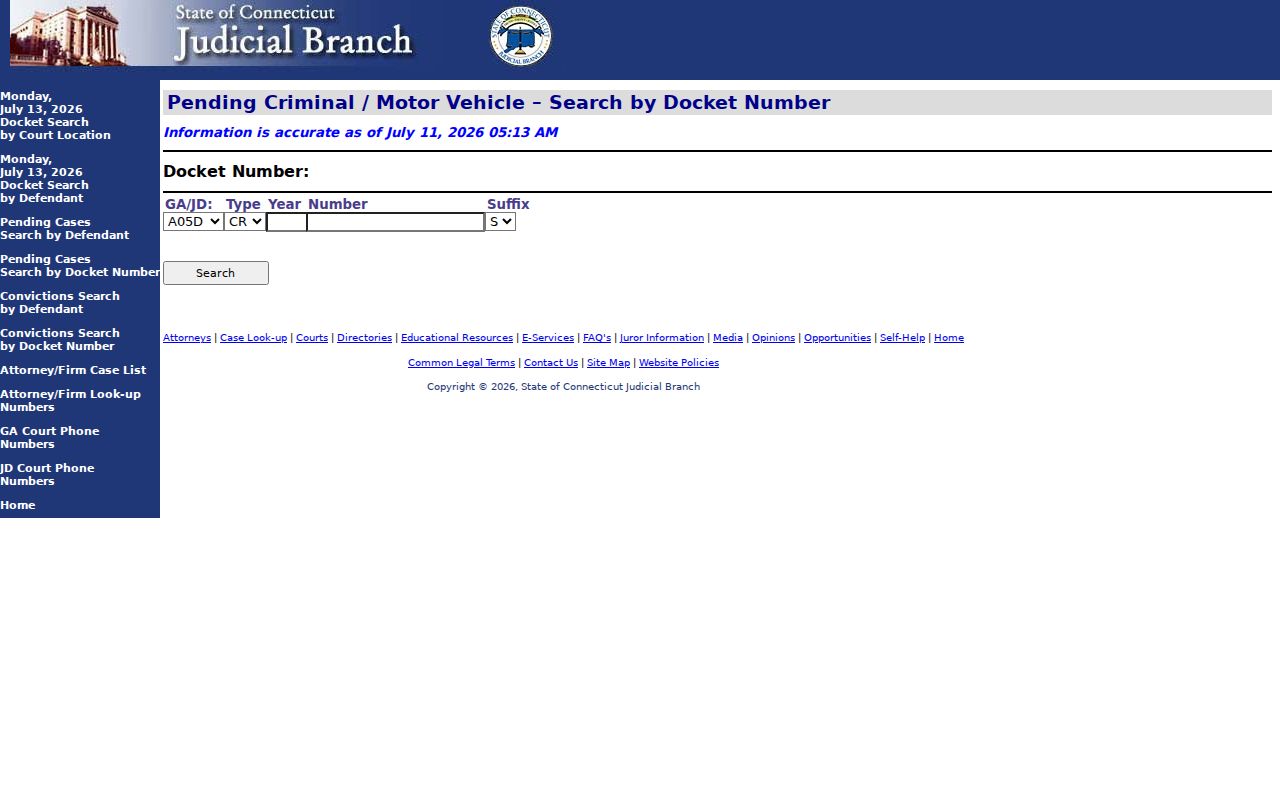
Known docket numbers reduce name-match errors and help the clerk identify the exact file.
Restricted Fairfield County Warrants
Connecticut public access rules start with public agency record access under Conn. Gen. Stat. sections 1-210 and 1-212, but warrant access is not unlimited. Sealed arrest warrants, search warrants in active investigations, juvenile matters, erased records, protected information, and some police investigative records can be withheld or redacted. Erasure under Conn. Gen. Stat. section 54-142a can also remove qualifying criminal records from public disclosure.
Traffic failures need a separate check. A missed infraction deadline may involve the Centralized Infractions Bureau, DMV consequences, and later court transfer. The court warrant result, traffic ticket record, and driver history are separate records.
Note: A cleared warrant may not update on every public screen at the same time, so keep proof of the court action.